Working with Japanese Makers: Communication, Payment Terms and What They Expect
Contents
Short answer: Write in Japanese if you can, by the channel the maker uses, and make the first message complete: what, how many, by when, for where. Expect a first order to be paid before production. Be precise, confirm everything in writing, and do not ask for changes casually after a sample is approved.
The first message decides a lot
A small Japanese maker receiving an unexpected enquiry from abroad is weighing one thing: is this a real order, and can we understand each other? A first message that answers the basic questions makes the answer easy:
- What the product is, with a photo or drawing
- Quantity for the first order
- When you need it
- Where it is going
- Who you are: your company or brand, and a website
A message that only says “please send your catalogue and prices” often goes unanswered, not out of rudeness but because there is nothing to reply to.
Language and channel
Many small makers have nobody who writes business English. An English email may be read with a translation tool and answered late, or not at all. Some makers still prefer a telephone call or a fax for new enquiries. Writing in polite Japanese, through the maker’s own contact form or by phone, gets more replies.
Payment for a first order
For a new overseas buyer, many Japanese makers ask for payment before production, at least for the first order. Bank transfer is the most common method. Terms such as a deposit with the balance on completion are sometimes possible once there is a relationship. Agree the terms, the currency and who pays the bank charges in writing before production starts.
Habits that help
- Be specific. Sizes in millimetres, colours by a sample or a colour reference, quantities as numbers.
- Confirm in writing. After a call, send a short summary of what was agreed.
- Respect the approved sample. Changes after approval restart part of the process and cost the maker time they did not plan for.
- Plan around holidays. Golden Week, Obon in August and the New Year break close many workshops.
- Say what comes next. If you hope to reorder, say so. Makers invest more in buyers who will come back.
When it helps to have someone in Japan
This is the work I do: I write to the makers in Japanese, call where a call works better, keep every agreement in writing, follow samples and production, and check the goods in Tokyo before export. Your questions and their answers go through me, in your language and theirs. See How it works for the steps and fees, or send a brief to start.
Some makers in the maker directory deal with overseas buyers in English directly; their pages say so.
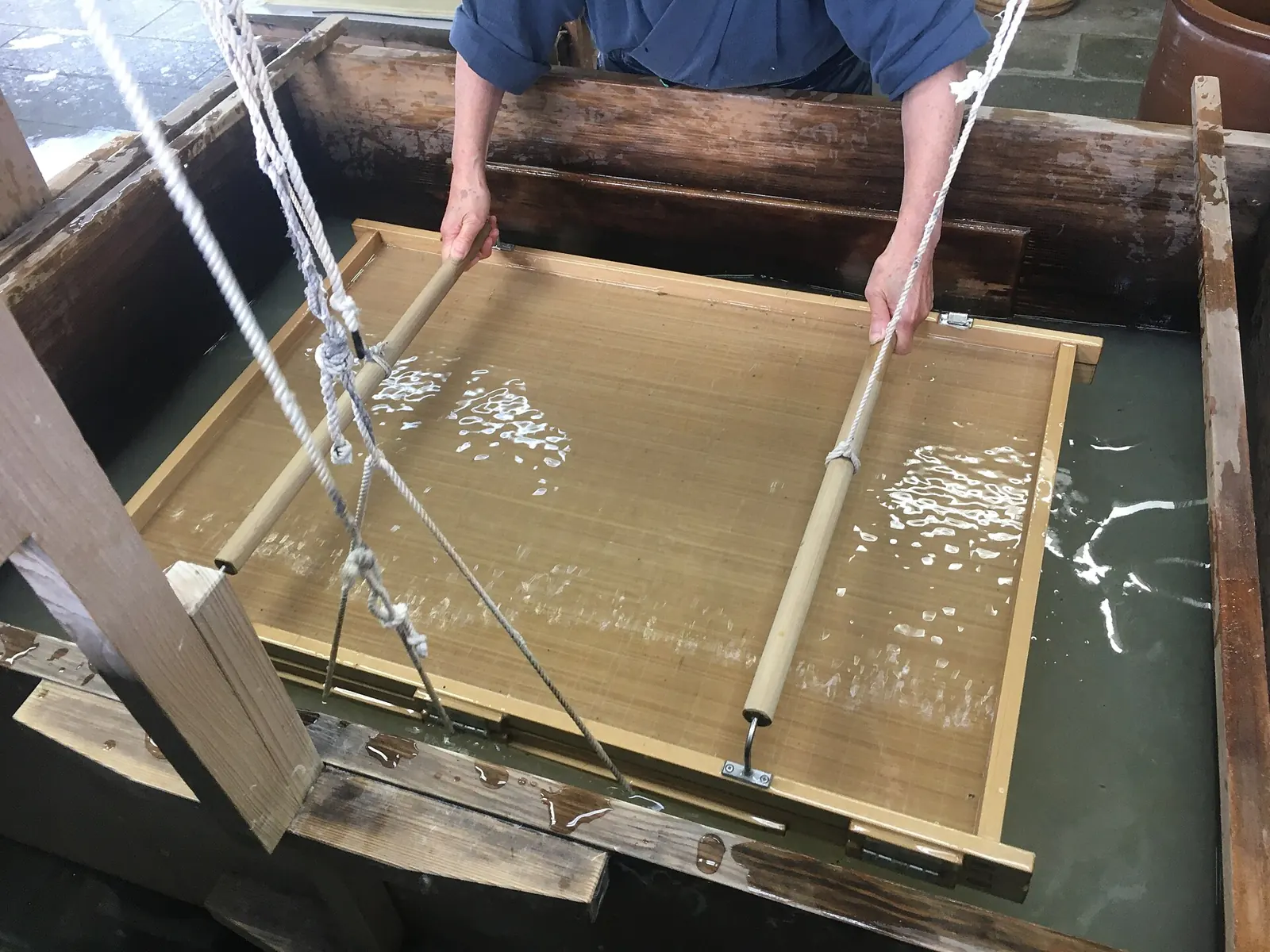
Top photo: “Echizen washi image.01” by UFshio, CC BY-SA 4.0, via Wikimedia Commons. Resized and cropped. ↗ CC BY-SA 4.0