Japan's 2026 Minimum Wage Rise and Factory Costs: What Buyers Should Expect
Contents
Short answer: Japan’s regional minimum wages are rising by ¥54 to ¥65 an hour this autumn, taking the national weighted average to ¥1,177 (from ¥1,121). Most prefectures apply the new rate in October 2026, some in November or December. At the same time, Japan’s producer prices in September 2026 were 6.8% higher than a year earlier. For a buyer, this means more Japanese makers revising prices, quotes with firm validity dates, and reorders that are best priced before you commit to your own retail prices.
The minimum wage for fiscal 2026
Each year, every prefecture in Japan sets its own minimum hourly wage. On 3 September 2026 the Ministry of Health, Labour and Welfare (MHLW) published the amounts recommended by the regional councils:
| Item | Figure (as published by MHLW) |
|---|---|
| National weighted average | ¥1,177 per hour (previous year ¥1,121) |
| Increase in the average | ¥56 (about 5.0%) |
| Increase by prefecture | ¥54 to ¥65, in all 47 prefectures |
| Highest | Tokyo, ¥1,280 |
| Lowest | Miyazaki, ¥1,085 |
| Effective dates | 1 October to 2 December 2026, prefecture by prefecture |
From the MHLW annex, 37 prefectures planned to apply the new rate in October 2026, 7 in November and 3 in December. MHLW notes that the dates may still change depending on objections filed after the councils’ reports, so treat them as planned dates.
The minimum wage is a floor. Many skilled workers in Japanese workshops earn more than it. But it matters for small makers: packing, sewing, finishing and inspection are often done by part-time staff paid close to the regional minimum, and when the floor rises, wages just above it tend to move too.
Other cost pressures in 2026
Wages are only one line. The Bank of Japan’s Corporate Goods Price Index shows what Japanese companies pay each other for goods. In the preliminary figures for September 2026, released on 13 October 2026:
| Index (September 2026, preliminary) | Change on a year earlier |
|---|---|
| Producer Price Index, all commodities | +6.8% |
| Pulp, paper and related products | +6.6% |
| Plastic products | +12.8% |
| Ceramic, stone and clay products | +5.1% |
| Metal products | +5.1% |
| Textile products | +1.4% |
| Electric power, gas and water | +10.5% |
| Import Price Index, yen basis | +24.5% |
The producer index fell 0.3% from August to September, so the monthly picture can move either way. But the yearly change is what shows up in a maker’s costs when they re-price a product they last quoted a year ago. Imported raw materials and energy are part of nearly every product, from the cotton in a towel to the kiln fuel for a plate.
Logistics rules
Domestic trucking in Japan has been changing for two years. Since 1 April 2024, overtime for truck drivers has been capped at 960 hours a year, and revised standards on drivers’ working hours apply from the same date. The amended Logistics Efficiency Act came fully into force in April 2026: shippers that handled 90,000 tonnes or more in the previous year must appoint a chief logistics officer, submit a medium- to long-term plan and report regularly. Most small makers are far below that size, but their carriers and larger customers are adjusting how and when goods are collected. I cannot put a number on what this adds to any one product, and I will not guess.
What this means for buyers
Price revisions
Japanese makers often announce price revisions (価格改定, kakaku kaitei) by letter, usually with an effective date some weeks ahead. With wages, materials and energy all higher than a year ago, more makers are revising in 2026. A revision applies to orders placed after its effective date; an order already confirmed at an agreed price is normally made at that price.
Why quotes have a validity date
A Japanese quotation (見積書, mitsumorisho) usually states how long it is valid. This is not a sales tactic. The maker is pricing materials it has not yet bought and labour it has not yet paid. When you receive a quote, note the validity date. If you need longer to decide, ask before it expires, not after.
Planning reorders
- Ask for a fresh quote before each reorder. Do not assume last year’s unit price still holds.
- Reorder before a known effective date if a maker has announced a revision and you already know what you need.
- Leave room in your own pricing. If your retail price was set on a quote from last year, check your margin against the new quote before you print price lists.
- Keep the same specification where you can. Changing the colour, material or packaging at the same time as a price revision makes it hard to see what changed the price.
- Watch the yen. Most makers price in yen (how payment usually works), so your cost in your own currency also moves with the exchange rate.
What I do when you order through me
I ask makers for written quotes with the validity date stated, and I pass that date on to you with the quote. When I ask for a quote for a reorder, I ask whether a price revision has been announced and from when, and I tell you before you confirm. The maker’s price and setup costs are shown as the maker states them, separately from my commission (what the costs are made of). The figures in this article are as of October 2026; check the MHLW and Bank of Japan pages listed below for later updates.
If you are planning a first order or a reorder for 2027, send me a brief and I will ask the makers for current, dated quotes.
Sources
- Ministry of Health, Labour and Welfare, 令和8年度地域別最低賃金の答申状況 (3 September 2026): www.mhlw.go.jp/stf/newpage_75950.html
- Ministry of Health, Labour and Welfare, 令和8年度 地域別最低賃金 答申状況 (annex, by prefecture): www.mhlw.go.jp/content/11302000/001745621.pdf
- Bank of Japan, Corporate Goods Price Index, preliminary figures for September 2026 (13 October 2026): www.boj.or.jp/en/statistics/pi/cgpi_release/cgpi2609.pdf
- Ministry of Health, Labour and Welfare, 2024年4月の改正「改善基準告示」適用で自動車運転者の働き方が変わる (December 2023): www.mhlw.go.jp/stf/houdou_kouhou/kouhou_shuppan/magazine/202312_001.html
- Ministry of Land, Infrastructure, Transport and Tourism, 物流効率化法について: www.mlit.go.jp/tochi_fudousan_kensetsugyo/const/butsuryuukouritsukahou.html
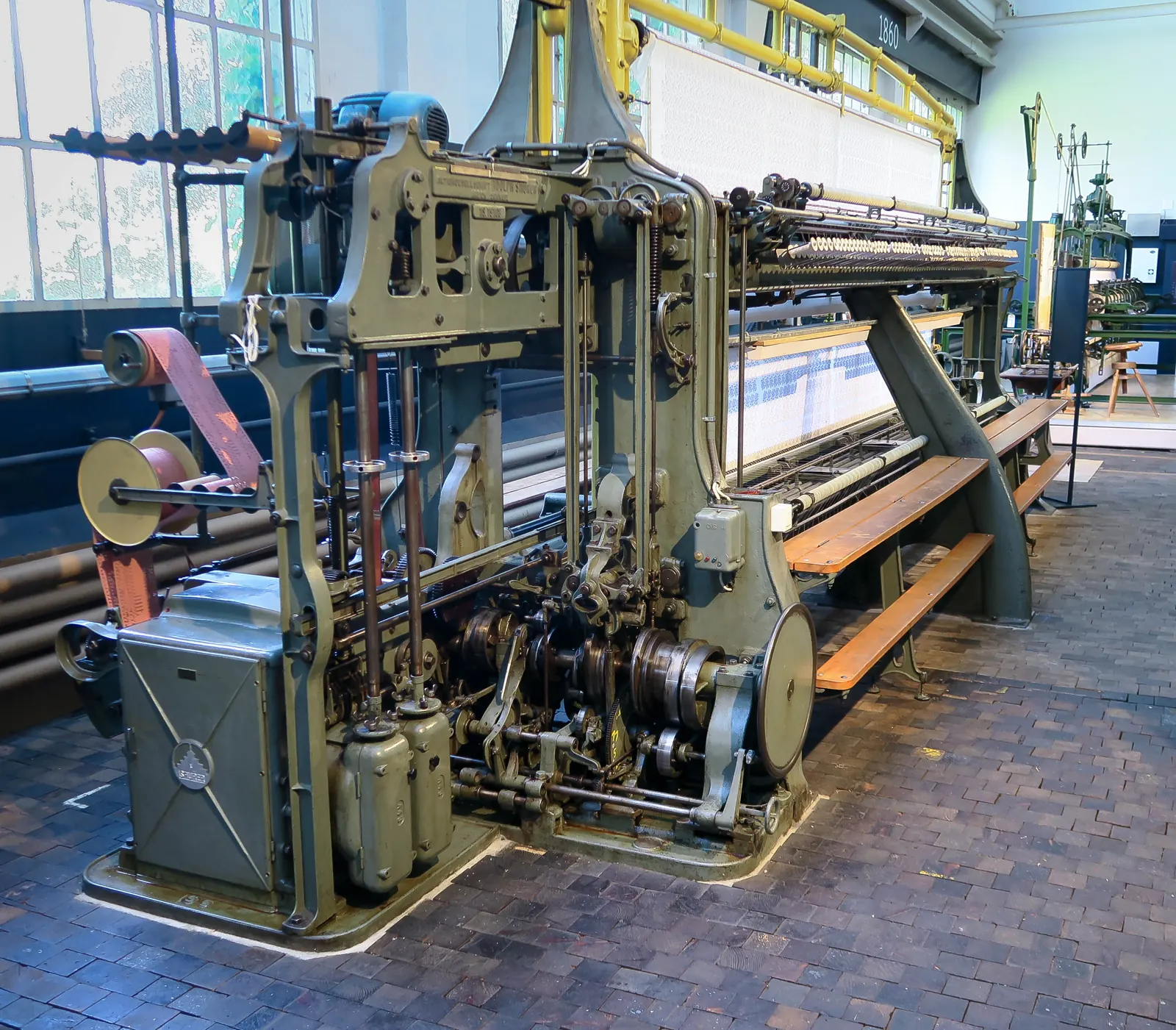
Top photo: “Fully automated schiffli embroidery machine by Saurer” by Chris Riedener, CC BY-SA 4.0, via Wikimedia Commons. Resized and cropped. ↗ CC BY-SA 4.0