Japan's Ageing Workshops: Closures, Successors and How Brands Can Plan for Continuity
Contents
Short answer: In 2025, 67,949 Japanese businesses closed or dissolved without going bankrupt, the second-highest number in ten years, and about half of Japanese companies still have no named successor. Most of these are very small firms with owners in their seventies or older. If your product depends on one small Japanese maker, the sensible response is not alarm but preparation: keep your own specifications and artwork, know where your moulds and dies are, and think about a second source and spare stock before you need them.
What the 2025–2026 data shows
Teikoku Databank (TDB), a Japanese credit research company, publishes the most widely cited figures. Its report of 9 January 2026 on closures and dissolutions (休廃業・解散, kyūhaigyō kaisan; businesses that stop trading without a legal bankruptcy):
| Closures in 2025 (TDB, 9 January 2026) | Figure |
|---|---|
| Businesses closed or dissolved (including sole proprietors) | 67,949 (2024: 69,019, the record) |
| Change on 2024 | −1.6% |
| Share that were profitable in their last accounts | 49.1%, below half for the first time since 2016 |
| Average owner age at closure | 71.5, the highest recorded |
| Owners aged 70 or over | 63.7% |
| Owners aged 80 or over | 24.4%, about double ten years earlier |
TDB describes many of these as a “quiet exit”: small firms closing while they still have money, rather than failing. It links the pattern to higher prices and labour costs, ageing owners, successor problems and staff shortages.
On succession, TDB’s survey of about 270,000 companies, published on 21 November 2025:
- 50.1% had no successor or had not decided one, down 2.0 points on 2024 and improving for the seventh year in a row.
- 57.3% among small enterprises (小規模企業).
- 42.4% in manufacturing, the lowest of the eight major industries.
- TDB expects the rate to stay around 50% for the time being.
More recent data points the same way. TDB’s August 2026 bankruptcy report (8 September 2026) counted 50 bankruptcies caused by successor problems in that month, up 47.1% on a year earlier, of which 10 were in manufacturing.
Traditional crafts
A July 2026 briefing paper from the Ministry of Economy, Trade and Industry (METI) on Japan’s designated traditional crafts (244 crafts as of 27 October 2025) gives the picture for workshops making things like lacquerware, ceramics, textiles and knives:
- About 48,000 people worked in these industries in fiscal 2022, and the number is slowly falling.
- 63.6% of them were in their fifties or older. 18.0% were 70 or over, against 6.0% aged 29 or under.
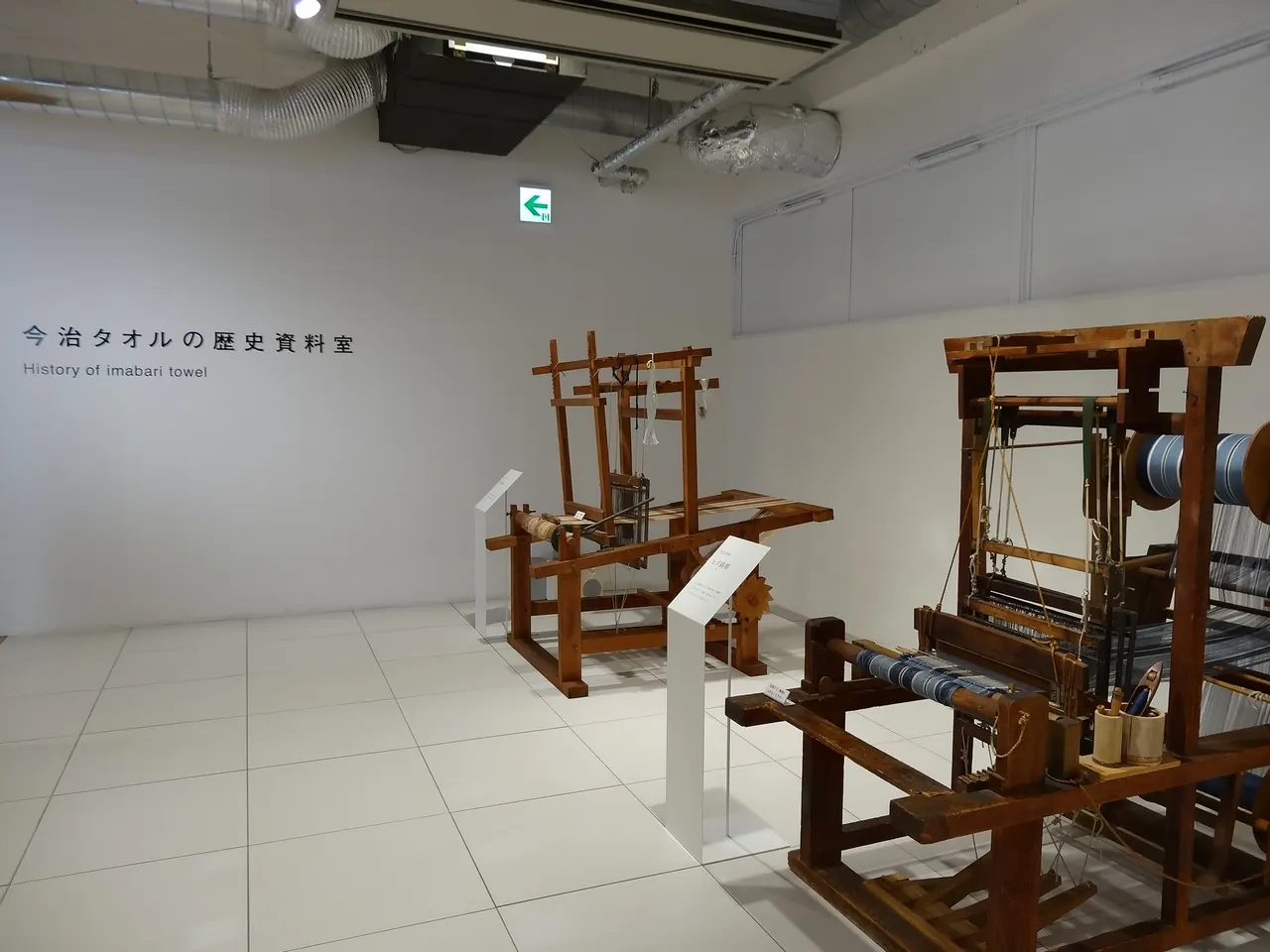
The same paper quotes producers on tools and materials. Some examples: for the tools used to make paulownia chests, roughly one tool maker is said to remain; looms are no longer newly made, so weavers maintain second-hand looms and take parts from workshops that have closed. The government supports craft regions with ¥1.08 billion in subsidies in the fiscal 2026 budget, including successor training.
What this means if you rely on a small maker
Most makers will carry on for years, and many are passing the business to a child, a senior employee or a buyer (TDB counts M&A and similar routes at 20.6% of successions in 2025, preliminary). The risk is real but manageable, and most of it is about information you should hold anyway.
Keep your own specifications
Write down, in one file you control: dimensions and tolerances, materials and grades, colours (with physical swatches if possible), finishes, logo size and position, packaging, labels and carton marks. Keep a signed-off pre-production sample. If a maker closes or a new owner takes over, this is what lets someone else make the same product.
Know who owns the tooling
Plates, dies, screens, moulds and printing files are usually paid for by the buyer but kept by the maker. Agree in writing who owns them, where they are kept, for how long, and whether you can have them back (more on this). Some tooling cannot be moved to another maker’s machines, but knowing that in advance is still useful.
Keep your artwork files
Keep the final print-ready files yourself: vector logos, colour references, die lines. Do not rely on the maker’s copy.
Think about a second source
For a product that matters to your business, it can be worth knowing a second maker who could produce it, even if you never order from them. Expect a new sample and new setup costs; a second maker’s version will rarely be identical.
Order spares sensibly
If a product is important and the maker is small, consider buying some extra stock with a regular order rather than waiting until you run out. Weigh that against storage cost and cash tied up; it is a business decision, not a rule.
Ask, politely
It is reasonable to ask a maker how they see the next few years. Many owners will tell you plainly. Ask in a way that shows you want to keep ordering, not that you are preparing to leave.
What I do when you order through me
When I place an order with a maker, I ask for the specifications, sample approval and tooling arrangements in writing, and I pass them to you so you hold your own copy. If a maker tells me they are closing or changing hands, I tell you as soon as I know, and I can look for another maker who does the same kind of work and quote them for you (how I search). Figures here are as of October 2026; TDB updates its surveys every year.
If you would like a second source or a first maker for a product, send me a brief.
Sources
- Teikoku Databank, 全国企業「休廃業・解散」動向調査(2025年) (9 January 2026): www.tdb.co.jp/resource/files/assets/d4b8e8ee91d1489c9a2abd23a4bb5219/a537ae9febfa44218a54df8bc5034f43/20260109_%E5%85%A8%E5%9B%BD%E4%BC%81%E6%A5%AD%E3%80%8C%E4%BC%91%E5%BB%83%E6%A5%AD%E3%83%BB%E8%A7%A3%E6%95%A3%E3%80%8D%E5%8B%95%E5%90%91%E8%AA%BF%E6%9F%BB%EF%BC%882025%E5%B9%B4%EF%BC%89.pdf
- Teikoku Databank, 全国「後継者不在率」動向調査(2025年) (21 November 2025): www.tdb.co.jp/report/economic/20251121-successor25y/
- Teikoku Databank, 倒産集計 2026年8月報 (8 September 2026): www.tdb.co.jp/report/bankruptcy/aggregation/20260908-bankruptcy202608/
- Ministry of Economy, Trade and Industry, 経済産業省説明資料(伝統的工芸品産業) (July 2026, published by the Agency for Cultural Affairs): www.bunka.go.jp/seisaku/bunkashingikai/bunkazai/kikaku/r07_r08/05/pdf/94408301_03.pdf
Top photo: “History room of Imabari towel weaving looms” by ja:User:Sanjo, CC BY-SA 3.0, via Wikimedia Commons. Resized and cropped. ↗ CC BY-SA 3.0