When Can a Product Say "Made in Japan"? Country-of-Origin Basics for Importers
Contents
Short answer: In most markets a product’s origin is the country where it last underwent a substantial transformation: where it became a new article with a different name, character or use. Sewing on a label, repacking or simple assembly in Japan does not make a product Japanese. Ask the maker where each main step happens, and confirm the rules for your own market. This article is general information, not legal advice.
The idea behind the rules
Customs authorities need to know where goods come from, for duties, trade preferences and the origin marking on the product. When more than one country is involved, most systems use the same idea: origin is where the goods were last substantially changed.
- United States. Imported goods generally must be marked with their country of origin under 19 CFR Part 134. Where processing happened in several countries, origin is decided by where the article was last substantially transformed into a new article with a different name, character or use. US Customs and Border Protection decides close cases one at a time and issues binding rulings on request.
- European Union. Under the Union Customs Code, goods produced in more than one country originate where they underwent their last substantial, economically justified processing that produced a new product or a significant stage of manufacture.
- Japan. Japan has its own rule against misleading origin claims on goods sold in Japan, based on the same idea of the country where the substantial change took place.
What usually does not count
- Attaching labels, tags or packaging
- Repacking or splitting into smaller packs
- Simple assembly of parts made elsewhere
- Minor finishing that does not change what the product is
Where this matters for Japanese products
Most products made by Japanese makers from start to finish are clearly Japanese in origin. The questions arise when part of the work happens elsewhere, which is common:
- Textiles woven abroad and sewn or finished in Japan, or the other way round.
- Knives with blades from one place and handles fitted in another.
- Stationery with covers made in Japan and inside pages imported.
- Ceramics formed in one place and decorated in another.
None of these is wrong. It simply means the origin on your label has to follow where the substantial step happened, and a maker should tell you that plainly.
What to ask a Japanese maker
- Where is each main step done: material, forming or weaving, finishing, assembly?
- What origin do they state on their own invoice and export documents?
- Can they put that in writing for your product?
I ask these questions as part of every quote and only describe origin in the words the maker gives in writing. If you need certainty for a borderline product, a customs broker or a binding ruling in your market is the safe route.
If you would like me to ask makers for you, send a brief.
Sources
- US Code of Federal Regulations, 19 CFR Part 134, Country of Origin Marking: www.ecfr.gov/current/title-19/chapter-I/part-134
- EU Union Customs Code, Regulation (EU) No 952/2013 (Article 60, non-preferential origin): eur-lex.europa.eu/eli/reg/2013/952/oj
- FTI Consulting, Country of Origin / Substantial Transformation Determination: www.fticonsulting.com/en/china/insights/service-sheets/country-origin-substantial-transformation-determination
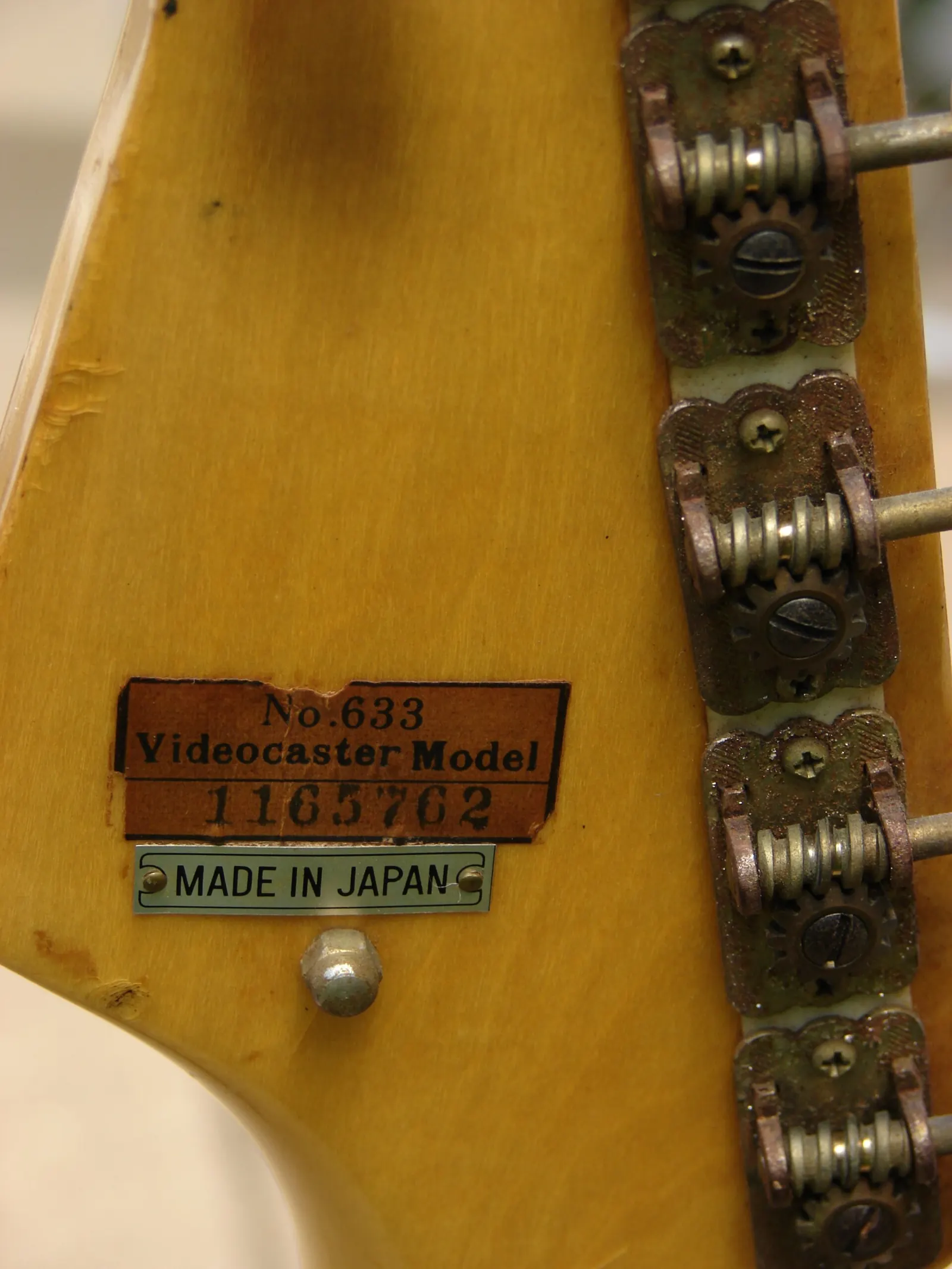
Top photo: “Guitar headstock label - No.633 Videocaster Model 1165762 Made In Japan” by Bryan, CC BY 2.0, via Wikimedia Commons. Resized and cropped. ↗ CC BY 2.0