Japanese Knife Steels for Buyers: Shirogami, Aogami, VG-10 and More
Contents
Short answer: Most Japanese kitchen knives are made from either carbon steel (such as Shirogami “white paper” and Aogami “blue paper” steels) or stainless steel (such as VG-10). Carbon steels take a very keen edge and are easy to sharpen, but they rust if not dried. Stainless steels need less care. When you sell knives under your brand, describe the steel exactly as the maker states it in writing.
Carbon steels: Shirogami and Aogami
Shirogami (白紙, white paper) and Aogami (青紙, blue paper) are carbon steels made in Yasugi, Shimane Prefecture, by the company formerly known as Hitachi Metals, now Proterial. The names come from the colour of the paper labels the steel was traditionally wrapped in.
- Shirogami is a very pure carbon steel. It takes a fine edge and is easy to sharpen on a whetstone, but needs careful heat treatment and rusts quickly if left wet.
- Aogami adds chromium and tungsten to a similar base, which helps the edge last longer. It still rusts.
Both come in grades (No. 1, No. 2 and so on) with different carbon content. Many knives use the steel only for the cutting core, clad in softer iron or stainless steel.
Stainless steels: VG-10 and others
VG-10 was developed by Takefu Special Steel in Echizen, Fukui Prefecture. It is a stainless steel with added cobalt, molybdenum and vanadium, widely used for kitchen knives because it holds an edge well and resists rust. Other stainless steels you may see include Ginsan (Silver No. 3), also from Yasugi, and powder steels such as SG2 (R2), which are very hard and hold an edge for a long time.
What it means for your customers
| Carbon (Shirogami, Aogami) | Stainless (VG-10, Ginsan, SG2) | |
|---|---|---|
| Sharpness | Very keen, easy to sharpen | Keen; harder steels take longer to sharpen |
| Rust | Rusts if not dried; develops a patina | Resists rust with normal care |
| Care | Wash, dry at once, oil occasionally | Wash and dry |
| Best for | Cooks who sharpen on stones | Most home kitchens |
Describing steel accurately
- Use the steel name the maker gives you in writing, including the grade.
- Say whether the steel is the whole blade or a core with cladding.
- Give hardness (HRC) only if the maker states it; published figures vary.
- Include care instructions in your listing and packaging, especially for carbon steel.
I ask makers for these details as part of every knife quote. See custom-logo kitchen knives from Japan and the kitchen knives page, or send a brief.
Sources
- Wikipedia, VG-10: en.wikipedia.org/wiki/VG-10
- Hocho Knife blog, Steel qualities of kitchen knives: carbon steel: blog.hocho-knife.com/steel-qualities/steel-qualities-of-kitchen-knives-1carbon-steel
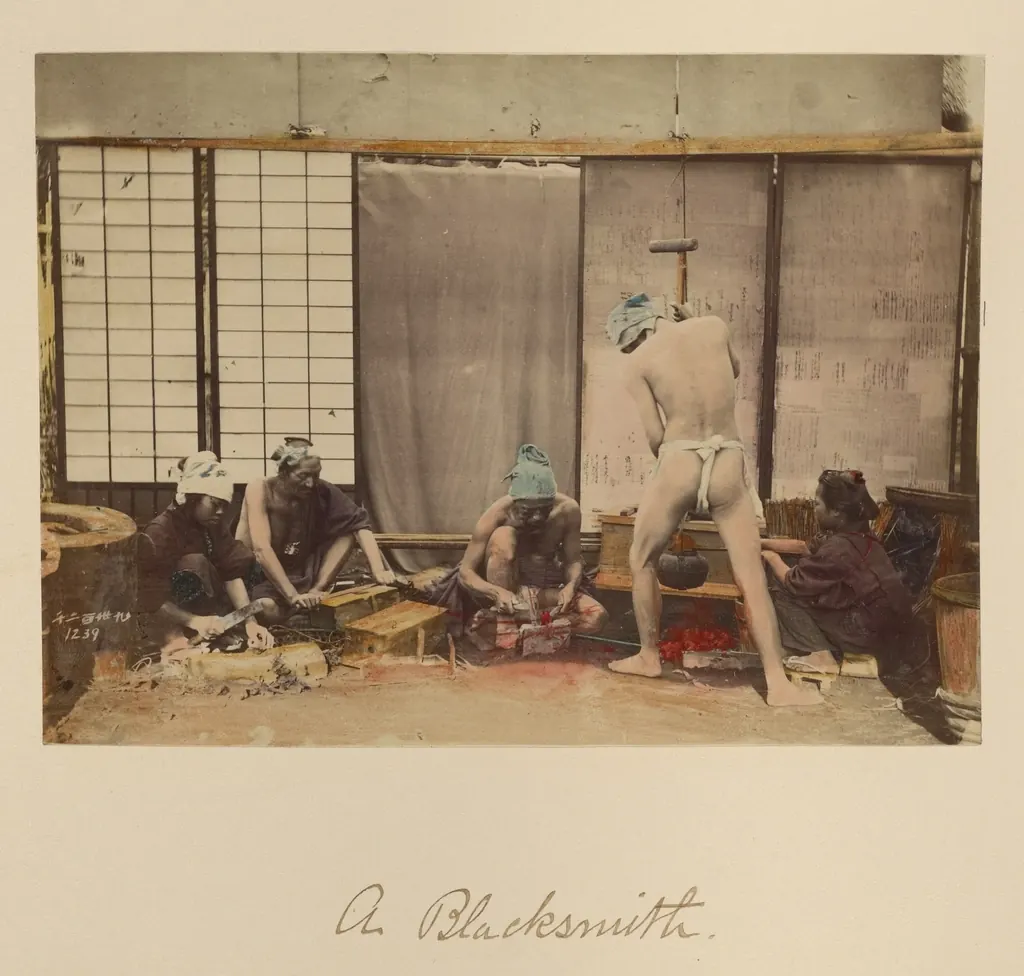
Top photo: “A Blacksmith” by Shinichi Suzuki (The J. Paul Getty Museum, open content), CC0, via rawpixel. Resized and cropped. ↗ CC0