Custom-Logo and Private Label Kitchen Knives from Japan: Seki, Sakai and How It Works
Contents
Short answer: Japanese kitchen knives for your brand usually come from Seki in Gifu or Sakai in Osaka. A logo is most often laser-marked or etched on the blade; handles, bolsters and boxes can also be yours. Check the knife rules for your own country, and for shipping, before you order.
Seki and Sakai
Seki (Gifu Prefecture) grew out of centuries of sword-making and is often named with Solingen in Germany and Sheffield in England as one of the world’s three great cutlery towns. Today it makes a very wide range, from industrially produced stainless knives to hand-finished ones, and it is one of Japan’s main sources of knives for export.
Sakai (Osaka Prefecture) is best known for traditional single-bevel knives used in Japanese professional kitchens: deba, yanagiba, usuba. Work there is often split between specialist craftsmen for forging, sharpening and handle-fitting.
Both towns also have makers in other trades nearby who supply handles, sheaths and boxes, which is what makes custom work possible.
How a logo goes on a knife
| Method | What it looks like | Notes |
|---|---|---|
| Laser marking | A sharp, dark or frosted mark on the blade | Common for small runs; the design is set by file, not by a tool |
| Etching | A matt mark, the traditional look on many Japanese blades | May need a stencil made for your design |
| Stamping | An impression in the steel | Needs a die; better for larger runs |
| Handle or box | Your logo on the handle, ferrule, sheath or gift box | Often easier than marking the blade |
Ask whether the maker’s own mark stays on the blade alongside yours. Some makers insist on it; some will leave it off.
What can be made for your brand
- Name imprinting: your mark on a maker’s existing knife.
- Private label: the maker’s knife in your box, with your mark.
- ODM: an existing knife with a different handle wood, ferrule, finish or length.
- OEM: steel, profile, grind and handle to your specification. Expect samples, setup and a longer lead time.
Rules to check before you order
- Your country’s rules on selling and importing knives. Some countries restrict certain blade types or how knives may be sold.
- Shipping. Postal services in several countries do not accept knives, and couriers have their own rules. I check the Japan Post conditions for the destination before quoting shipping, and switch to a courier where post is not allowed.
- Steel and care information. Ask the maker for the steel type and hardness in writing, so your product information is accurate.
Getting quotes
Send me a brief with the knife type, quantity and where it is going, and I will ask Seki and Sakai makers in Japanese and bring back their own figures in writing. Knife makers who list themselves are in the maker directory.
Sources
- nippon.com, Seki: Gifu's Traditional Center of Swordsmiths: nippon.com/en/guide-to-japan/gu900239
- Kireaji, Seki: One of the World's Top Three Cutlery Centers: kireaji.ca/pages/jp-knife-handbook-seki
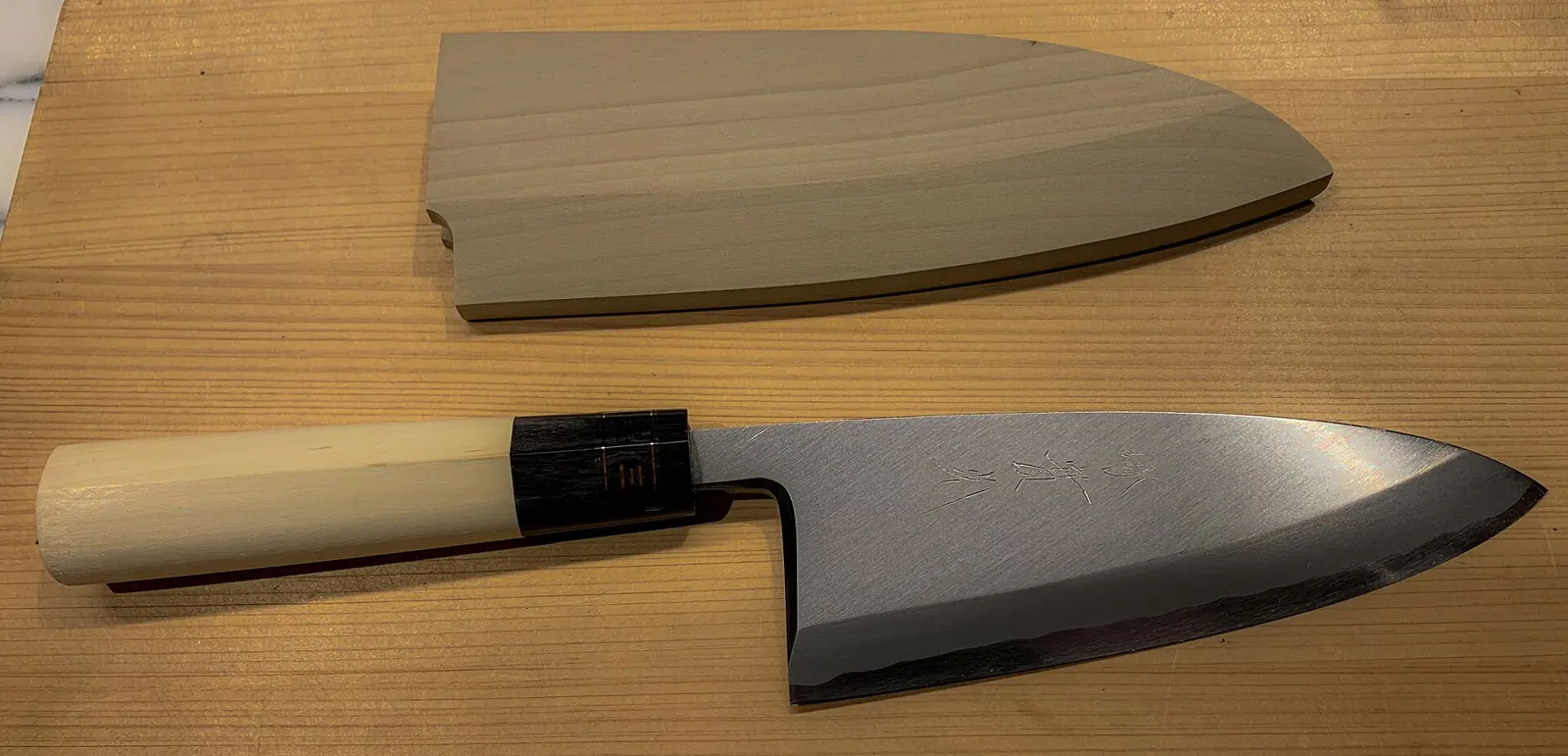
Top photo: “Deba Shouren Ginsan stainless steel Knife, Jikko Knives, Sakai (49070649923)” by Stephan Ridgway from Brisbane, Australia, CC BY 2.0, via Wikimedia Commons. Resized and cropped. ↗ CC BY 2.0