Japan's Manufacturing Calendar: Golden Week, Obon and New Year in Your Production Plan
Short answer: Three periods slow down almost every Japanese maker: the New Year break (roughly the end of December to the first days of January), Golden Week (late April to early May) and Obon (mid-August). Busy gift seasons before the summer and before year-end fill workshops too. Build these into your schedule, especially for samples and for a first order.
The three long breaks
| Period | When (typical) | What happens |
|---|---|---|
| New Year (shōgatsu) | About 29 December to 3 January, sometimes longer | Many workshops and offices close; carriers are busy before and after |
| Golden Week | Late April to early May (a cluster of national holidays) | Many small makers close for several days |
| Obon | Around mid-August | Not a national holiday, but many factories close for a few days to a week |
Exact dates move each year. In 2027, for example, Showa Day falls on 29 April and the three Golden Week holidays on 3 to 5 May, according to nippon.com’s list of national holidays. Ask each maker for their own closing days; they differ.
The busy seasons
- Before the summer gift season (ochūgen) and before year-end (oseibo): makers of gift goods, towels and tableware are busiest, and lead times grow.
- Planners and calendars must be produced months before the year they cover; see custom planners.
- Spring is the start of the Japanese business and school year, which affects stationery and corporate gift orders.
How to plan around them
- Send briefs early. A brief sent two weeks before Golden Week may get its answer after it.
- Approve samples before a break. Otherwise the production slot can slip by weeks.
- Ship before the break. Couriers and post are busiest immediately before and after New Year.
- Ask for the maker’s calendar when you receive the quote.
Your side of the calendar
Your own selling season matters too. Work back from the date you need the goods: shipping, customs, production, sample approval, quotes. See samples, setup costs and lead times.
Send me a brief with the date you need the goods, and I will tell you which makers can meet it.
Sources
- nippon.com, Japan's national holidays: www.nippon.com/en/japan-data/h02794/
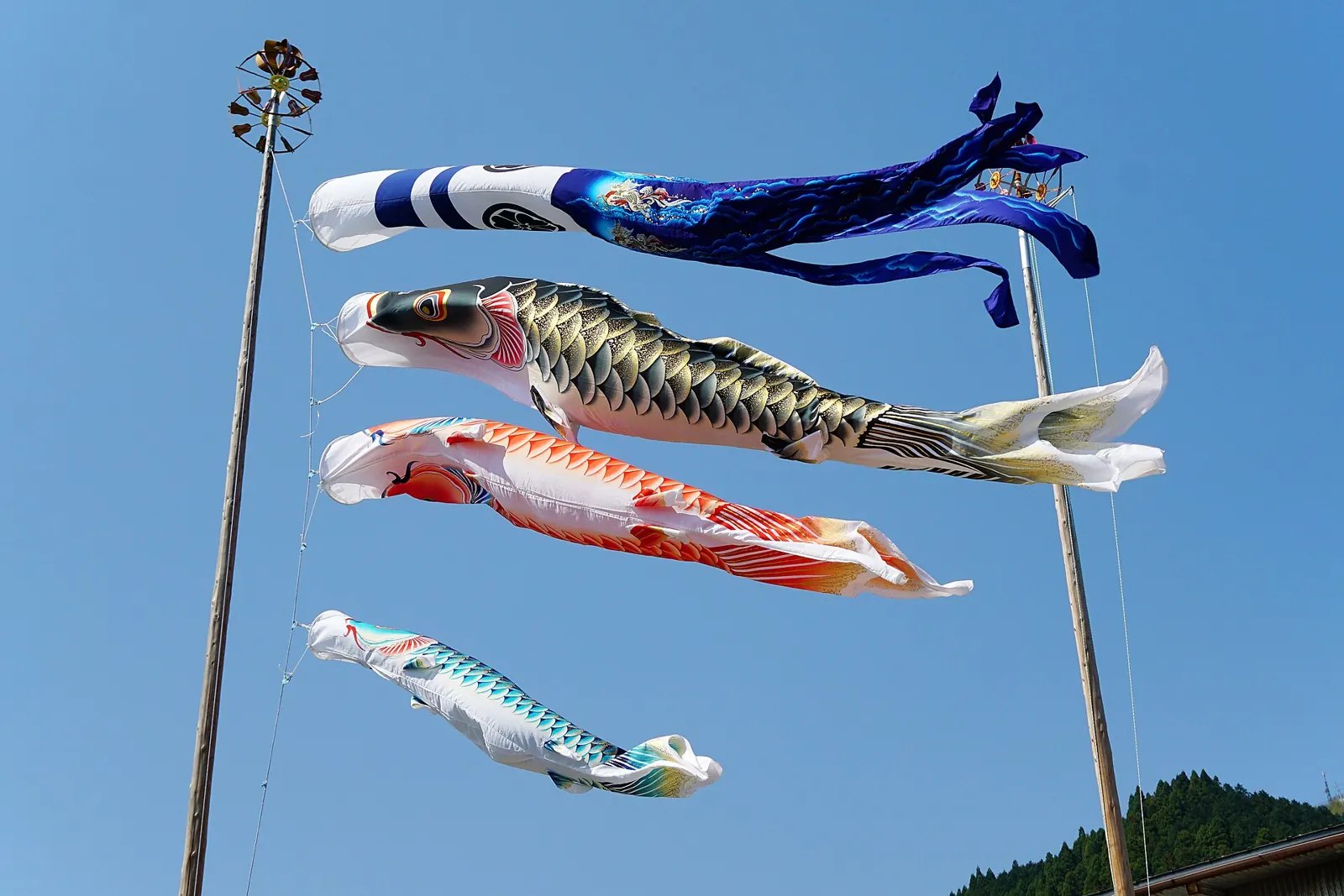
Top photo: “150425 Koinobori Chizu Tottori pref Japan01bs” by 663highland, CC BY 2.5, via Wikimedia Commons. Resized and cropped. ↗ CC BY 2.5