Samples, Setup Costs and Lead Times When Manufacturing in Japan
Short answer: Before production you usually pay for samples and for anything made specifically for your product: plates, dies, moulds, woven label patterns. The timeline runs brief, quotes, first sample, changes, pre-production sample, production, inspection, export. Changes at the sample stage are where most of the time goes.
Costs that come before production
| Cost | What it is | Notes |
|---|---|---|
| Samples | A first piece to check the idea | Often charged; sometimes credited against the order |
| Pre-production sample | Made with the real materials, logo and packaging | Becomes the reference for the production run |
| Printing plates | For foil stamping, printing, decals | One per design and often per colour |
| Cutting or stamping dies | For shapes, die-cut boxes, stamped marks | One-off, reusable for reorders |
| Moulds | For ceramics, metal or plastic parts | The largest one-off cost |
| Woven label patterns | For jacquard labels and woven-in logos | One-off |
Agree in writing who owns each one, whether it can be reused for reorders, and how long the maker keeps it. I never assume a sample will be free.
How the timeline runs
- Your brief. A sample, photo or drawing; quantity; target price; destination.
- Maker shortlist and questions in Japanese.
- Written quotes, side by side: unit price, minimum, lead time, setup and sample costs, payment terms.
- First sample. Changes happen here; each change usually means another sample.
- Pre-production sample. You approve it in writing.
- Production on the approved terms.
- Inspection against the approved sample.
- Export by post or courier for small lots, by freight for larger ones.
I do not put typical durations on these steps, because they depend entirely on the trade and the maker’s schedule. The lead time that matters is the one the maker writes on the quote.
Where delays come from
- Unclear briefs. A missing size or colour reference costs a round of samples.
- Changes after the sample. Each change restarts part of the process.
- Material lead times. A special paper, yarn or glaze may have to be ordered or tested first.
- Busy seasons. Many Japanese makers are busiest before year-end gift season and before the spring business year.
- National holidays. Golden Week (late April to early May), the Obon period in August and the New Year break slow everything down.
How I handle it
I follow each sample and production run with the maker, and the goods come to me in Tokyo before export. I open the cartons, compare them against the approved sample and photograph what I find; nothing ships until you have seen the result. Sample handling and dispatch is €25 per shipment plus carriage; basic inspection is free with any order. All fees are on How it works.
Send a brief to start. The search and the written quotes are free.
Sources
- JEPRA, OEM manufacturing in Japan: how it works, what it costs and how long it takes: jeprajp.com/2026/10/07/oem-manufacturing-japan-how-it-works/
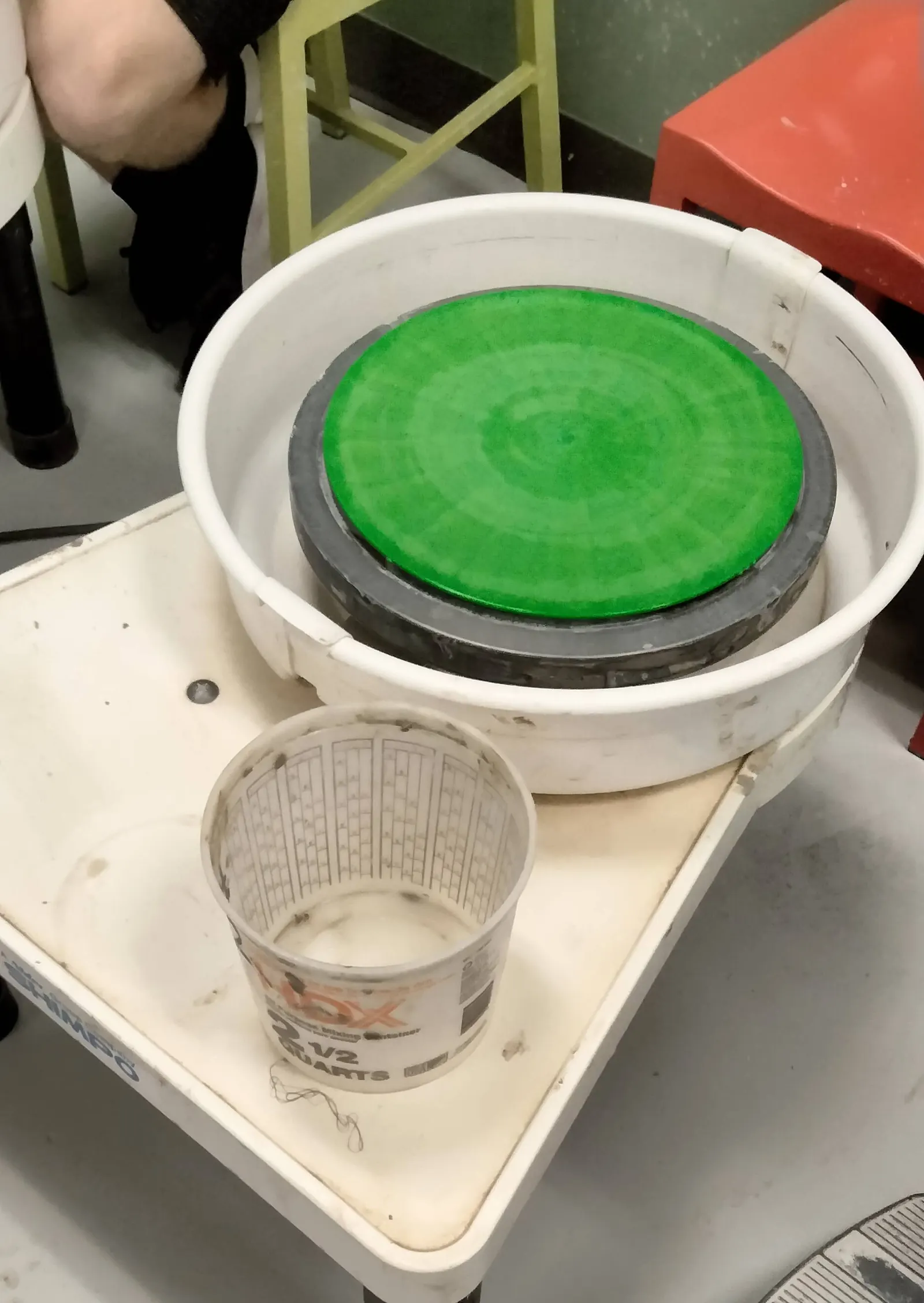
Top photo: “Electric potter's wheel” by Lomrjyo, CC BY-SA 4.0, via Wikimedia Commons. Resized and cropped. ↗ CC BY-SA 4.0