Custom Furoshiki: Japanese Wrapping Cloths with Your Design
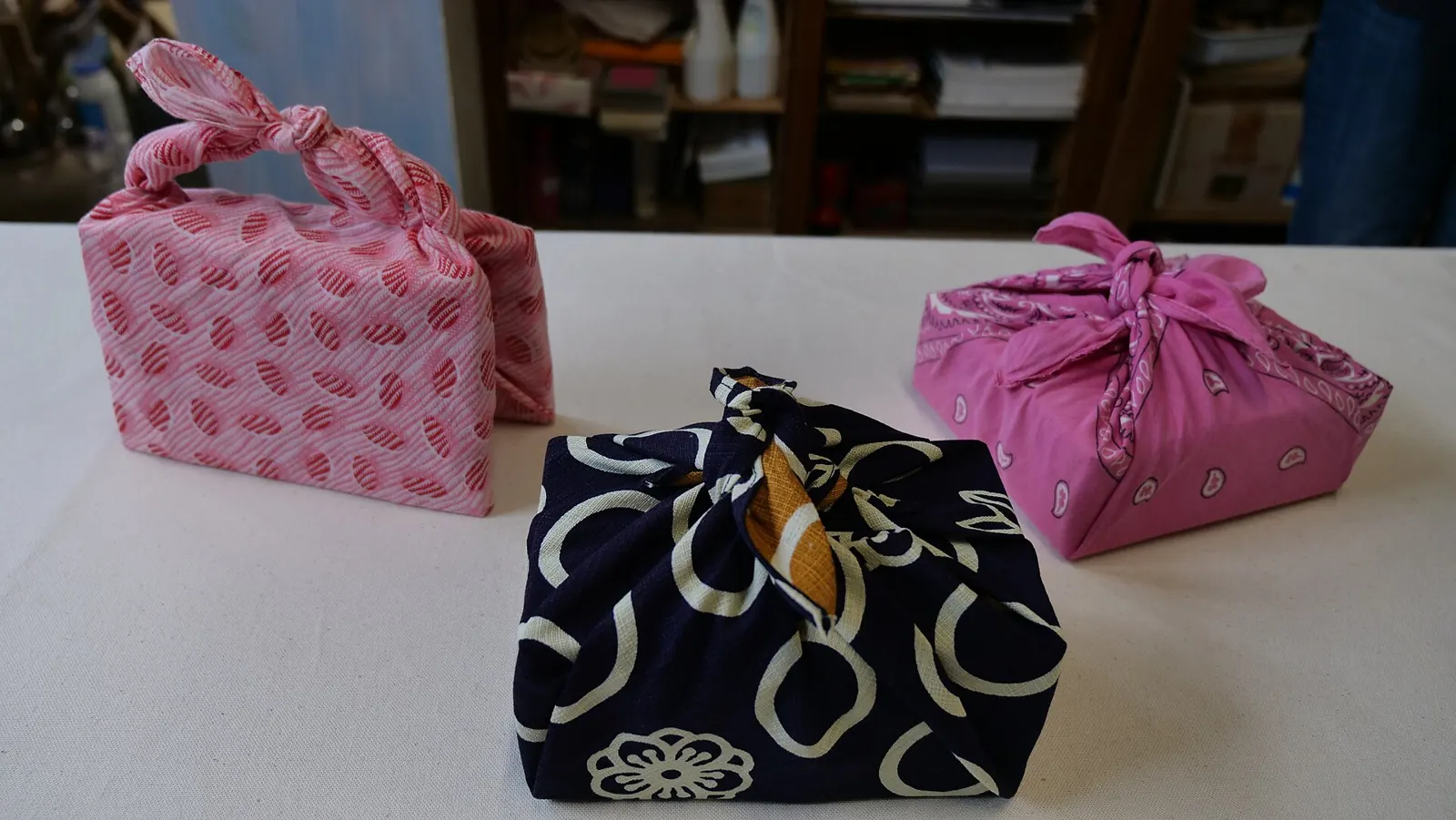
Short answer: A furoshiki is a square cloth used in Japan to wrap and carry things, from gifts to lunch boxes. It is reusable, which makes it popular with shops and brands as gift wrapping and as a product in its own right. A custom furoshiki comes down to three choices: fabric, size and how the design is printed or dyed.
Why brands choose furoshiki
- Reusable gift wrapping that customers keep, with your design on it.
- A product in its own right, sold as a scarf, a bag, a wall hanging or a table cloth.
- Easy to ship: flat, light and hard to damage.
Fabrics
| Fabric | Character | Typical use |
|---|---|---|
| Cotton | Easy to tie, washable, matt | Everyday wrapping, bags, lunch boxes |
| Polyester | Bright print, quick-drying, crease-resistant | Printed gift wrapping, promotional items |
| Silk or silk blends | Soft, lustrous, expensive | Formal gifts |
| Linen or hemp blends | Textured, natural look | Lifestyle and craft shops |
Sizes
Furoshiki are square, and Japanese makers usually work with a set of standard sizes, from small cloths for a lunch box or a bottle to large ones for carrying bulky items. A standard size is almost always cheaper and quicker than a custom one, because the fabric width and cutting are already set up. Ask the maker for their standard sizes before choosing yours.
Printing and dyeing
- Screen printing: sharp, many colours, the usual choice for a logo or graphic design.
- Digital (inkjet) printing: photographic or very detailed designs, often in smaller runs.
- Hand dyeing (such as chusen, the method used for tenugui): softer colours that go right through the cloth; each piece varies.
Ask whether the design shows on both sides. Printed furoshiki are often coloured on one side only; dyed ones on both.
What to send
- Your design as a square, with colours marked
- Fabric and size, or “your standard”
- Quantity, and packaging (folded in a sleeve, with a card that shows how to tie it)
Getting quotes
Send me a brief and I will ask Japanese textile printers and dye works in Japanese, and bring back their own figures in writing. Furoshiki and tenugui makers who list themselves appear in the maker directory.
Top photo: “Furoshiki, traditional japanese wrapping technique with cloths (1)” by Culture Japon, CC BY-SA 4.0, via Wikimedia Commons. Resized and cropped. ↗ CC BY-SA 4.0