Shipping Small Lots from Japan: Post, Courier or Freight?
Contents
Short answer: Small orders usually go by Japan Post (EMS or international parcel) or by an express courier; larger ones by air or sea freight. EMS is limited to 30 kg per parcel for most destinations, and some goods are restricted by post but accepted by courier. Check the destination’s postal conditions before you quote shipping, not after.
The three routes
| Route | Good for | Notes |
|---|---|---|
| Japan Post (EMS, parcels) | Samples and small orders | Weight and size limits per parcel; conditions differ by destination |
| Express courier | Urgent or restricted goods, higher values | Usually faster; their own rules for batteries, blades and liquids |
| Air or sea freight | Pallets and cartons by the cubic metre | Needs a forwarder and usually a customs broker at the other end |
Japan Post limits
For most destinations, EMS accepts parcels up to 30 kg, with a maximum length of 1.5 m and length plus girth of 3 m. Some destinations have lower limits; the United States has a lower length-plus-girth limit, and a few countries are capped at 20 kg or less. Japan Post publishes the limits for every country, and a larger order simply goes as several parcels.
Restricted goods
Japan Post lists, for every destination, what is prohibited and what is conditionally accepted. The conditional list is the one that is easy to miss: an item may be allowed only with a permit, a certificate or special packing. Knives, for example, must have the edge and point covered and be packed securely. Commercial couriers are not bound by the postal list, though they have their own rules. I check the destination’s postal conditions before every quote; if post is not possible, I quote a courier instead.
Customs papers
Every commercial shipment needs an accurate description, value and origin:
- Describe goods plainly, by what they are and what they are made of.
- Declare the real value. Under-declaring is illegal, and it also leaves the goods underinsured.
- Group lines by tariff classification, not one line per colour or design. A customs form with sixteen lines for sixteen designs of the same product can cost more in some markets than one line with the total.
- State the origin exactly as the maker confirms it (how origin is decided).
Duties and taxes at the other end
Import duties and taxes are paid in the destination country, usually by the importer. They depend on the product’s classification, its origin and the country’s rules, and some markets have changed how low-value parcels are taxed. Ask your customs broker or postal service before you set retail prices.
How I handle shipping
I quote shipping as a fixed amount with the order, choose the route by weight, value and destination, and pack and ship from Tokyo after inspection. See How it works or send a brief.
Sources
- Japan Post, List of EMS size and weight limits: post.japanpost.jp/int/ems/size/index_en.html
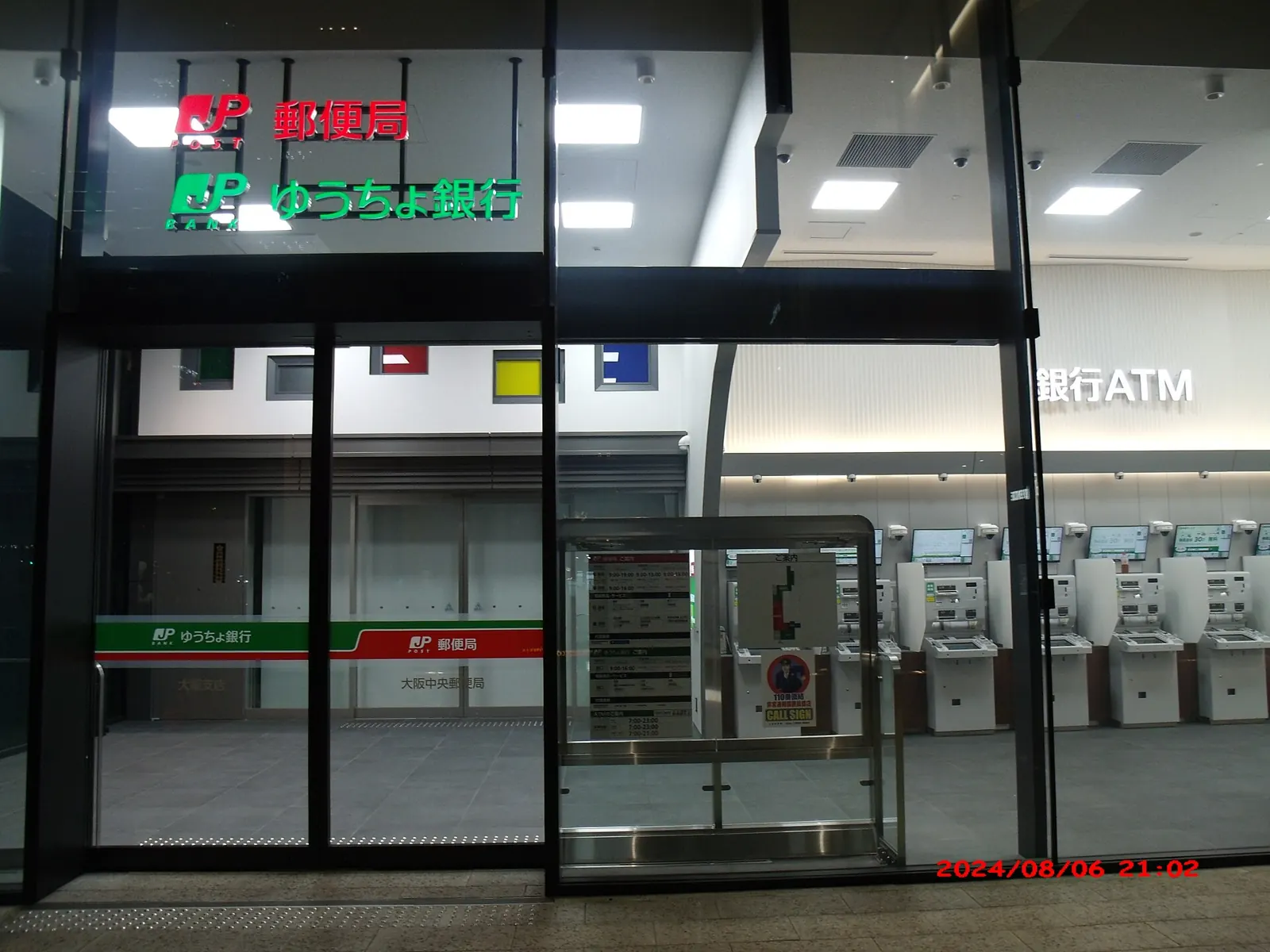
Top photo: “Osaka Central Postal Office & Japan Post Bank Osaka Branch” by Mr.ちゅらさん, CC0, via Wikimedia Commons. Resized and cropped. ↗ CC0