Japan's Officially Designated Traditional Crafts: What the Label Means for Buyers
Contents
Short answer: Under a 1974 law, Japan’s Minister of Economy, Trade and Industry designates “traditional crafts” (伝統的工芸品, dentōteki kōgeihin): crafts made in a region by traditional methods and materials for at least about a century. There were 244 as of October 2025. Products that pass the producers’ association’s inspection can carry an official mark. Not every product from a famous craft region qualifies, so describe what you sell accurately.
What designation means
A craft is designated as a whole, for a region: for example Arita ware, Echizen washi, Sakai knives or Wajima lacquerware. Designation recognises that the craft is made mainly by hand, using traditional techniques and materials, in a production area where it has been made for a long time. It also lets producers’ associations apply for support to train successors and promote the craft.
According to the Ministry, the total reached 244 in October 2025, when Tokyo hand-carved seals were added.
The traditional craft mark
Products that meet the designated standards and pass the inspection of the local producers’ association can carry a certification label with the traditional craft mark. The mark is about how the product is made, not about who sells it.
Why this matters when you buy
- A region name is not the same as designation. A plate made in a famous pottery town may be made by modern factory methods; that does not make it worse, but it is not the designated traditional craft.
- Ask how the product is made. By hand or machine, with which materials, and whether it carries the certification label.
- Use the words the maker gives you. If a product carries the label, you can say so. If not, describe it by its region and method without implying certification.
Traditional crafts and private label
Designated crafts are often made by small workshops with limited capacity, and some will put only their own or the region’s name on their work. Name imprinting or your own packaging is sometimes possible; a product made entirely to your specification may not be, if it would no longer follow the traditional method. Ask early.
The category pages list designated crafts relevant to each trade: kitchen knives and ceramics and tableware. If you want me to ask makers for you, send a brief.
Sources
- Ministry of Economy, Trade and Industry, designation of Tokyo hand-carved seals as a traditional craft (October 2025): www.meti.go.jp/english/press/2025/1027_003.html
- Wikipedia, List of Traditional Crafts of Japan: en.wikipedia.org/wiki/List_of_Traditional_Crafts_of_Japan
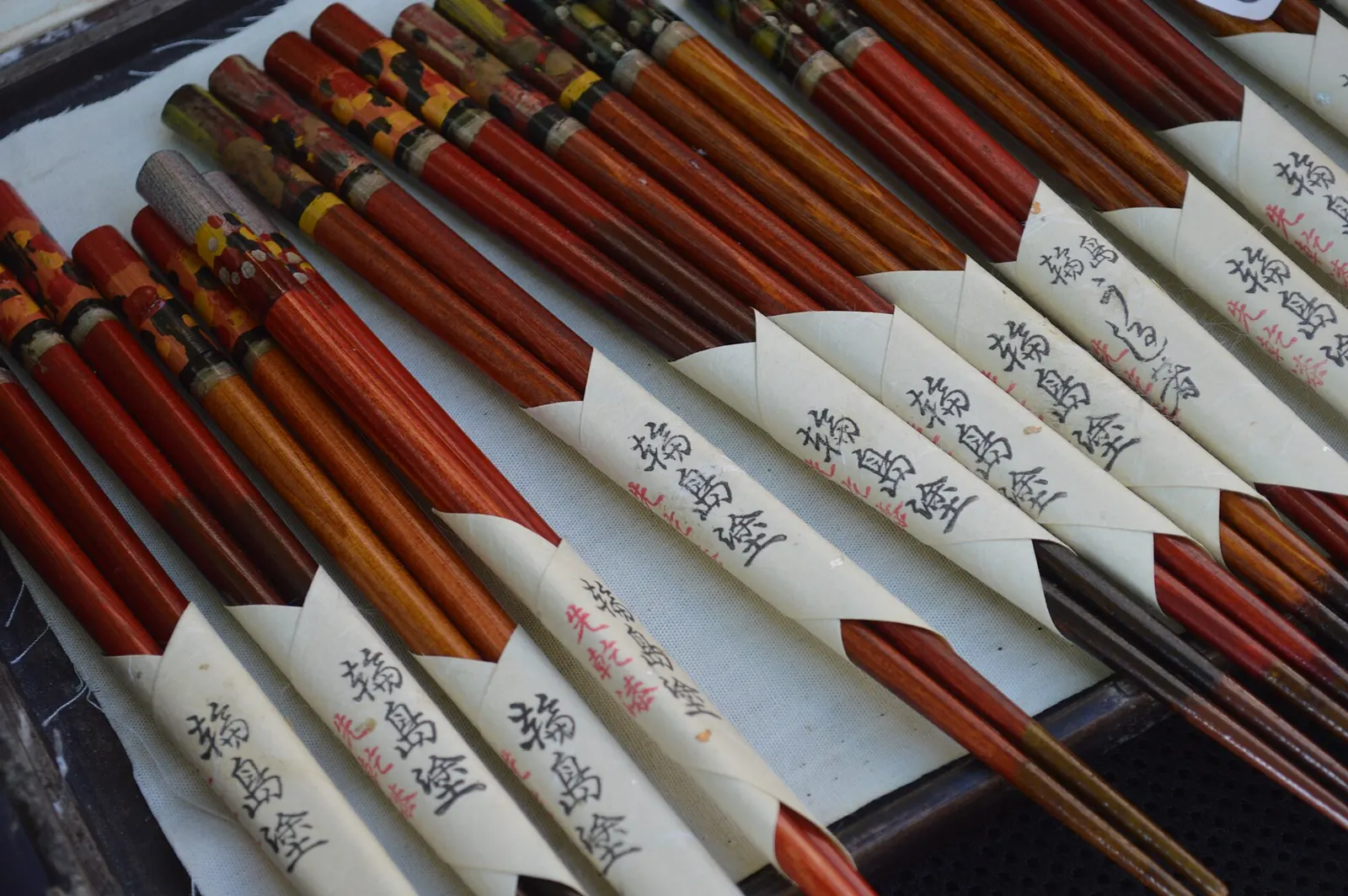
Top photo: “Wajima-nuri chopsticks ac (1)” by Asturio Cantabrio, CC BY-SA 4.0, via Wikimedia Commons. Resized and cropped. ↗ CC BY-SA 4.0