Custom Paper Boxes and Gift Packaging Made in Japan
Short answer: Japan has many small box makers who make rigid gift boxes, folding cartons and paper-wrapped (harikomi) boxes, often in modest quantities. A custom box is defined by its type, size, paper and finish. Using one of the maker’s existing sizes, and a paper they stock, is the quickest way to keep the minimum down.
Types of box
| Type | What it is | Good for |
|---|---|---|
| Rigid box (lid and base) | Board wrapped in printed or textured paper | Gifts, premium products, knives, ceramics |
| Folding carton | Printed card folded into shape, ships flat | Retail packaging, larger runs |
| Drawer (sleeve) box | A tray sliding into a sleeve | Stationery, accessories |
| Paper-wrapped box with window | Rigid box with a clear window | Products you want seen |
Finishes
- Foil stamping (hakuoshi) of your logo on the lid
- Embossing or debossing
- Speciality papers: textured, coloured or washi wraps
- Inserts: card, foam or moulded pulp to hold the product
What drives the minimum
- Size: a new size needs a new cutting die; an existing size does not.
- Paper: special papers are bought by the ream and can set the minimum by themselves.
- Printing: full-colour printing has a setup cost per design; a plain paper with a foil logo often does not need printing at all.
- Hand work: paper-wrapped rigid boxes are often finished by hand, which allows small runs but sets the price.
What to send
- The product’s dimensions and weight, or a sample
- The type of box, and how it should open
- Your logo and where it goes
- Quantity, and whether boxes ship flat or assembled
Getting quotes
Send me a brief and I will ask Japanese box makers in Japanese. Packaging is often quoted together with the product it holds; see samples, setup costs and lead times.
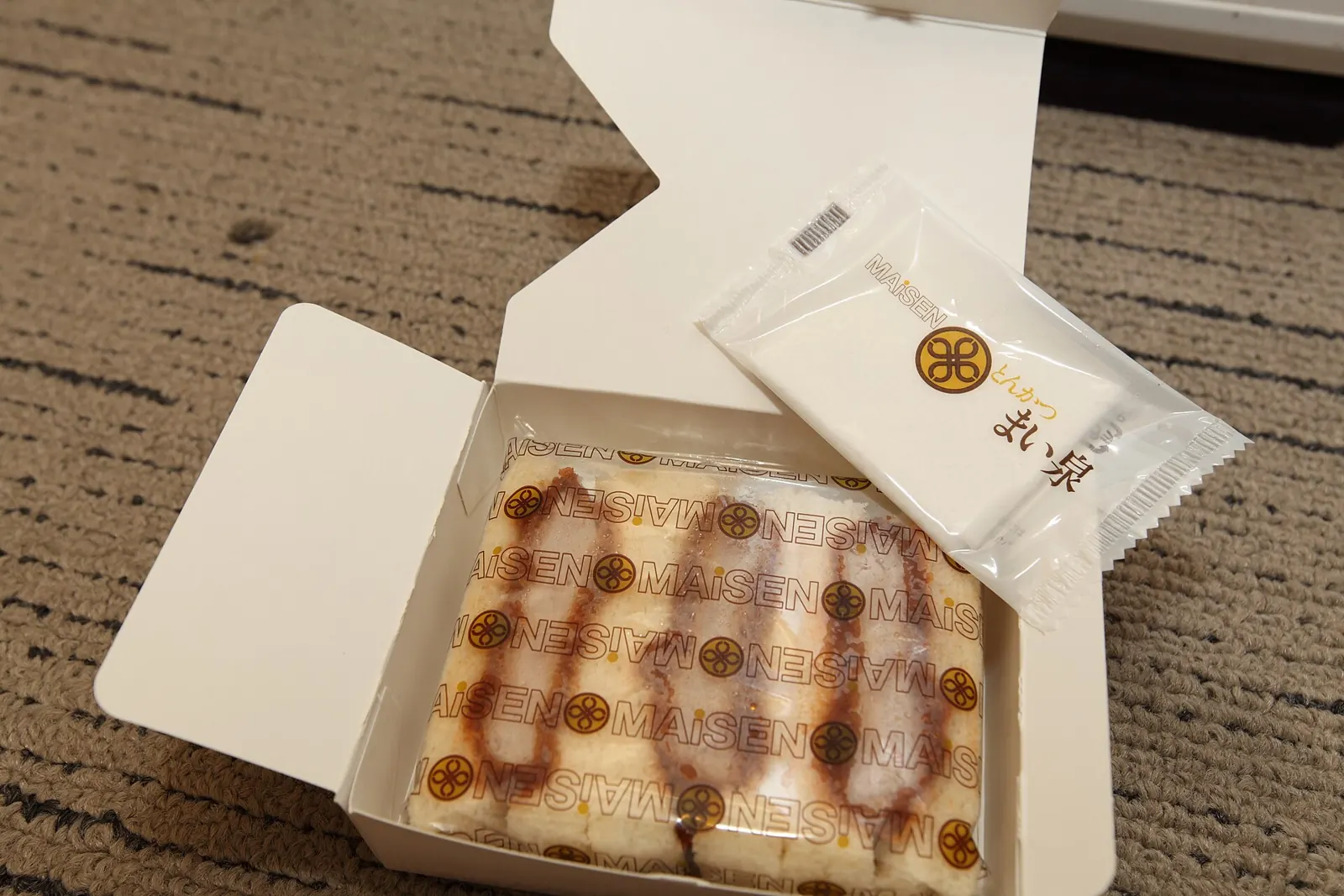
Top photo: “まい泉 (8352540600)” by 思弦 張, CC BY 2.0, via Wikimedia Commons. Resized and cropped. ↗ CC BY 2.0